

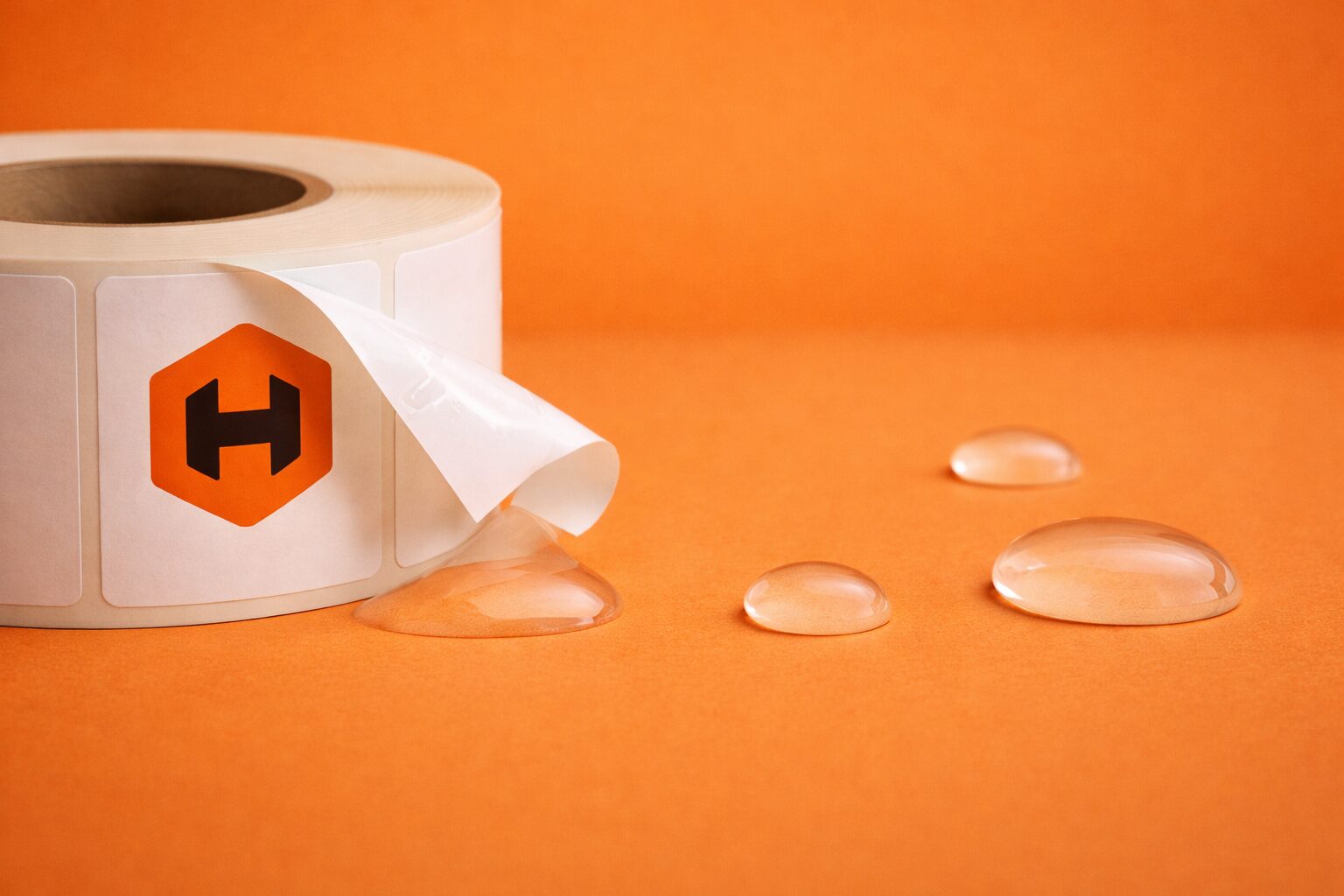
23 Apr Waterproof, Oil-Resistant & Chemical-Resistant Roll Labels: How to Choose the Right Durable Label
Not all labels are built for clean, dry, climate-controlled environments.
Some need to survive:
- water and condensation
- oils and grease
- cleaning chemicals and solvents
- UV exposure and outdoor weather
- abrasion from handling, shipping, and production
When standard paper labels fail, durable roll labels become essential.
If your labels are peeling off detergent bottles, smudging in refrigerated storage, or breaking down on nursery pots exposed to sun and water, the issue usually isn’t the print—it’s the material and adhesive combination.
This guide explains how waterproof, oil-resistant, and chemical-resistant roll labels work—and how to choose the right option for your application.
What Makes a Label “Durable”?
A durable label is built using two key components:
- The Face Material (Facestock)
This is the visible part of the label—the part that gets printed.
For harsh environments, paper is often replaced with synthetic materials like:
- BOPP (polypropylene)
- PET (polyester)
- Vinyl
- Specialty film stocks
These materials resist:
- moisture
- tearing
- oils
- chemicals
- fading
- abrasion
- The Adhesive
Even the best facestock fails if the adhesive can’t stay bonded.
Durable labels often require:
- permanent adhesives
- high-tack adhesives
- freezer-grade adhesives
- chemical-resistant adhesive systems
The surface matters just as much as the environment.
A detergent bottle and a glass jar may both need waterproof labels—but they often require completely different adhesives. For more details on which adhesives are best for your product, head over here.
Common Applications for Durable Roll Labels
Food & Beverage Products
Typical examples:
- refrigerated products
- sauces and condiments
- beverage bottles
- freezer packaging
Challenges:
- condensation
- refrigeration
- oils and grease
- repeated handling
Recommended solution:
Waterproof film facestock + moisture-resistant permanent adhesive
Clear bottles, squeeze bottles, and refrigerated containers often need more than standard paper labels to prevent lifting and edge curl. It’s absolutely possible to create a durable finished label, even if you’re printing in-house. If you’re curious about printing in-house versus working with a printing partner, we break it down in detail here.
Industrial & Chemical Containers
Typical examples:
- cleaning products
- chemical drums
- automotive fluids
- industrial lubricants
- janitorial products
Challenges:
- solvents
- oils
- abrasion
- regulatory compliance
Recommended solution:
Chemical-resistant synthetic label stock + aggressive permanent adhesive
Chemical-resistant labels are specifically built for solvent resistance and harsh manufacturing or lab environments, and are often a great use case for a hybrid approach where your labels are initially printed by a professional label printer, with certain areas intentionally left blank so that you can finish the printing process in-house. This gives you more flexibility and control over the details—more on that here.
This is especially important for:
- GHS labeling
- hazardous materials
- long-term product identification
Failure here is not just annoying—it can become a compliance issue.
Nursery Pots & Outdoor Plant Labels
This is a perfect real-world example.
Typical examples:
- nursery pots
- plant stakes
- greenhouse labels
- garden centre retail labels
Challenges:
- constant watering
- UV exposure
- mud and abrasion
- outdoor temperature swings
Recommended solution:
UV-resistant synthetic labels + strong permanent adhesive
These labels need to survive both logistics and retail environments while still looking good enough to sell the product.
If the label curls, fades, or falls off halfway through the season, it fails.
Personal Care & Household Products
Typical examples:
- shampoo bottles
- body wash
- lotion tubes
- detergent bottles
Challenges:
- moisture
- oils
- squeezable packaging
- low surface energy plastics (HDPE / LDPE)
Recommended solution:
BOPP or PET facestock + high-tack adhesive
This is where many businesses discover that “waterproof” and “sticks well” are not the same thing.
Both matter.
The Most Common Mistake
The biggest mistake is assuming “waterproof” only refers to the label surface.
It doesn’t.
A label can be waterproof and still fail if:
- the adhesive isn’t right
- the surface is difficult to bond to
- the application temperature is wrong
Waterproof labels still rely on permanent adhesive performance across plastic, glass, and other surfaces.
The label must survive both:
- the environment
- the packaging surface
Ignoring either one causes failure.
Quick Material Guide
Choose BOPP When:
- moisture resistance matters
- flexibility is needed
- packaging is consumer-facing
- squeezable containers are involved
Very common for:
food, beverage, household products
Choose PET When:
- chemical resistance is critical
- higher heat resistance is needed
- industrial durability matters
Very common for:
automotive, industrial, compliance labeling
Choose Vinyl When:
- outdoor weather exposure is severe
- long-term durability matters most
Very common for:
nursery, horticulture, outdoor industrial use
Should You Laminate?
Sometimes, yes.
A laminate adds:
- extra abrasion resistance
- UV protection
- chemical resistance
- scuff protection
This matters most when:
- labels are handled frequently
- outdoor life is long
- premium appearance matters
For nursery and industrial applications, lamination often extends useful label life significantly.
When to Test First
Always test when:
- labels are exposed to chemicals
- oils contact the label regularly
- containers are flexible (HDPE / LDPE)
- products live outdoors
- labels must remain compliant long-term
A small test run is much cheaper than replacing failed labels after production, particularly if you’re using custom size or shape roll labels.
Not Sure Which Durable Label You Need?
Choosing the right waterproof or chemical-resistant label depends on:
- the product surface
- the environment
- the expected lifespan
- the printer or application method
If you’d like to consult with us on material and adhesive selection before you order, reach out here and tell us:
- what product you’re labeling
- what the label is exposed to
- whether you print in-house or order pre-printed
Our team can help recommend the right material and adhesive so small problems don’t become expensive ones.
Published April 2026