

30 Mar What Label Adhesive Is Best For My Product?
Choosing the right label adhesive depends on three factors:
your packaging material, your environment, and your application method.
If any of these are mismatched, labels may peel, lift, or fail over time.
This guide outlines how to select the correct adhesive based on real-world use conditions so that you have one less labelling element to wonder about.
Why Adhesive Selection Matters
The adhesive determines whether a label stays applied throughout its lifecycle.
A label that looks correct but uses the wrong adhesive may:
- Lift at the edges
- Fail in cold or wet environments
- Lose adhesion on flexible packaging
In most applications, adhesive choice is more critical than label material.
-
Identify Your Packaging Surface
Start by identifying what your label is being applied to.
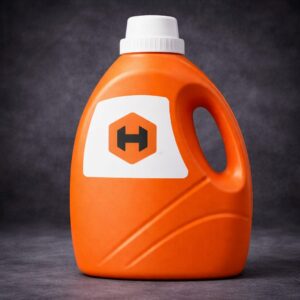
HDPE (High-Density Polyethylene)
Common uses:
- Detergent bottles
- Cleaning products
- Industrial containers
HDPE is a low surface energy (LSE) plastic.
Recommendation:
Use a high-tack or LSE adhesive designed for difficult-to-bond surfaces. For more info on label materials that pair with these adhesives, head over to our article on chemical-resistant labels.
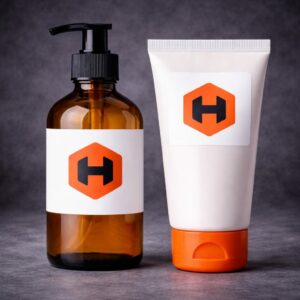
LDPE (Low-Density Polyethylene)
Common uses:
- Squeeze bottles
- Shampoo and personal care products
- Flexible packaging
LDPE is also low surface energy and introduces movement (flexing).
Recommendation:
Use a flexible, high-tack adhesive that maintains bond during container deformation.
Glass and Metal
Common uses:
- Food and beverage packaging
- Cosmetics
- Specialty products
These are high surface energy materials and are easier to bond to.
Recommendation:
Standard permanent adhesives perform well unless environmental conditions require otherwise.
-
Evaluate the Environment
After identifying the surface, evaluate where the product will be stored and used.
Cold Storage or Refrigeration
- Labels may be applied to cold surfaces or stored at low temperatures
Recommendation:
Use a cold-temperature adhesive rated for application and storage conditions.
Moisture and Condensation
- Common in beverage, food, and refrigerated products
Recommendation:
Use a moisture-resistant adhesive that maintains bond strength in wet conditions.
Heat or Outdoor Exposure
- Includes sunlight, temperature fluctuation, or extended storage
Recommendation:
Use an adhesive designed for temperature resistance and long-term stability.
-
Choose the Right Adhesive Type
Permanent Adhesives
- Designed for long-term application
- Most common for product labeling
Use when: Labels are not intended to be removed.
Removable Adhesives
- Allow clean removal without residue
Use when: Labels are temporary or containers are reused.
Freezer-Grade Adhesives
- Maintain adhesion through freezing conditions
Use when: Products are stored or transported below freezing.
Quick Selection Guide
Use this as a baseline:
- HDPE or LDPE containers → High-tack / LSE adhesive
- Squeeze bottles → Flexible adhesive with strong initial tack
- Refrigerated or wet environments → Cold-temp or moisture-resistant adhesive
- Standard rigid packaging → Permanent adhesive
If multiple conditions apply, test before committing to production.
When to Test Adhesives
Testing is recommended when:
- The surface is low energy (HDPE, LDPE)
- The product is exposed to moisture or cold
- The container flexes or changes shape
Testing confirms:
- Initial adhesion
- Long-term performance
- Environmental durability
Small test runs reduce risk before full production, and also allow you to ensure printer compatibility. If you’re curious about that, head over here for printer compatibility info.
Adhesive Considerations for In-House Printing
Adhesive selection applies whether labels are printed in-house or pre-printed.
For in-house printing, compatibility must also be confirmed between:
- Printer type (check out our resources on unwind direction and custom size roll labels)
- Label material
- Adhesive system
Many businesses start with printed labels and transition to in-house printing as volumes grow or labeling needs become more dynamic. We have some great info here on when it makes sense to move to in-house printing, or a hybrid model.
Linerless Labels: Adhesive Still Matters
Linerless labels use the same adhesive principles but without a release liner.
Instead of individual labels, they are wound as a continuous roll and cut during application.
Key consideration:
The adhesive must balance:
- Strong surface adhesion
- Controlled release during dispensing
Linerless labels are commonly used in:
- Logistics and shipping
- High-volume operations
- Applications focused on reducing waste
In Short:
Adhesive selection can be simplified to three questions:
- What surface am I labeling?
- What environment will the label face?
- Does the container move or flex?
Answering these correctly will narrow down the appropriate adhesive quickly.
Need Help Choosing?
There is no universal adhesive for all applications.
If you’re unsure, get in touch with us here and our team can recommend an adhesive based on your:
- Packaging material
- Use environment
- Production process
Happy labelling!
Updated March 30, 2026.